Published on July 7, 2026 at 02:47 PM
Your beverage cooler knows more than your data team. Here’s how it powers agentic AI.
Imagine you are the CEO of a bottling company and you meet with your executive team to talk about artificial intelligence. Where does the conversation start?
Most begin by talking about tools: which platform to use, which model to implement, or which vendor to choose. However, the first step should be different: asking whether the company has the right data for AI to generate real impact.
For most beverage companies, the honest answer is still: not yet.
Artificial intelligence is only as powerful as the data that feeds it. Without accurate, continuous, high-frequency operational information, even the most advanced models will have limited impact.
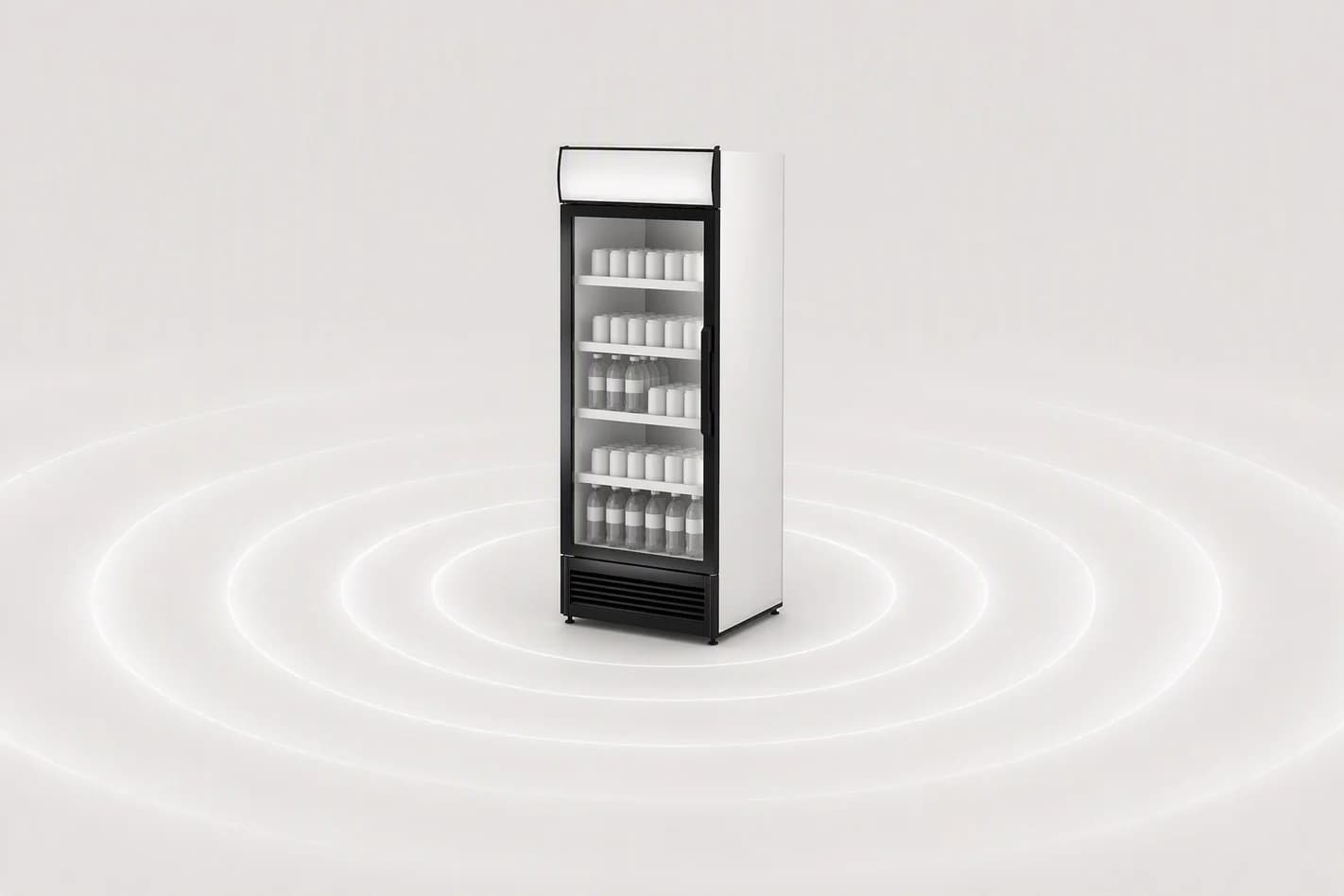
In the beverage industry, that data already exists exactly where the consumer and the product converge: in the beverage cooler. However, for years coolers have been underestimated as a strategic source of data for artificial intelligence. Most remain disconnected, unmonitored, while companies continue making decisions based on estimates instead of real-time information.
About a decade ago, bottlers in Latin America were losing up to six percent of their cooler fleets each year. Equipment abandoned in warehouses, changes of ownership at points of sale, and theft caused thousands of assets to simply disappear. When it became clear that field teams could not physically locate every lost cooler, a new solution emerged: if the cooler could transmit its location via Bluetooth or cellular connectivity, it could also be managed remotely. That is how AoFrio’s connected cooler platform was born.
Once connected, the value of the data grew exponentially. Variables such as temperature, door openings, compressor cycles, energy consumption, and failures began to converge on a single cloud platform, creating a centralized source of information to analyze the performance of millions of assets.
Today, AoFrio’s data ecosystem brings together more than 3.2 million connected coolers worldwide, built continuously since the launch of our first IoT solution in 2017. With almost a decade of real operating data, our platform’s machine learning algorithms can identify patterns and relationships between equipment behavior and performance that no analyst could detect manually, even when reviewing large volumes of information.
A clear example is predictive maintenance. By analyzing patterns in compressor operation and temperature variations, we can anticipate which coolers have a high probability of failure weeks before it occurs.
For a bottler managing tens of thousands of assets distributed across multiple territories, this completely transforms fleet management. Every additional hour of availability represents protected sales. Every avoided technical visit reduces operating costs and frees up resources for higher-value activities. IoT connectivity stops being a technology initiative and becomes a direct factor in profitability.
Agentic AI will take this evolution one step further. A sensor detects an anomaly—such as an overheating compressor or a deteriorated door seal. The system identifies the problem, automatically generates a work order, and assigns the nearest technician with the right spare part before the failure occurs. Once the intervention is complete, the result feeds back into the model, which automatically adjusts its parameters for future decisions.
No manual reports. No endless email chains. No waiting for someone to detect the problem.
The cooler returns to optimal operating conditions before the next replenishment.
The addition of computer vision adds a new layer of commercial intelligence. Cameras make it possible to identify which SKUs are selling, validate planogram compliance, and measure display performance across different store formats and markets.
By combining this information with external data—such as weather, local events, or promotional calendars—AI will stop being limited to explaining what happened and begin recommending and even executing actions that optimize commercial performance.
Leading beverage companies are already moving in that direction. PepsiCo has publicly communicated its vision of becoming an agentic AI-first organization, implementing systems capable not only of analyzing market conditions but also of acting automatically on them, optimizing inventories and responding in real time to retail signals.
For its part, Coca-Cola has shared how artificial intelligence is strengthening its demand forecasting capabilities and helping its commercial partners manage inventories with greater precision.
However, the reality is that the vast majority of coolers installed in the market are still not connected. They do not generate data. They do not produce signals. And therefore, they cannot feed any AI strategy.
The data generated by connected coolers will be one of the most valuable assets for the next generation of artificial intelligence in the beverage industry. Unlike other business indicators, this type of information is built over time. It cannot be bought or recovered later.
Those who start earlier will have years of real data to train models capable of differentiating an incipient compressor failure from a seasonal temperature increase. Those who arrive late simply will not be able to recover that history.
My recommendation for beverage companies defining their AI strategy is simple:
Do not wait for the perfect model. Start by building the most important asset: your operational data. Your coolers generate valuable information 24 hours a day. Prioritize connecting the entire fleet. The opportunity is already here, but it will not remain open forever.